Select one of the options below:

Prepare for a career in natural resource tourism in the private, public, or nonprofit sectors.
Tourism is one of the largest sources of employment in the world, currently accounting for 1 in 10 jobs globally. The tourism industry also depends greatly on the continued conservation of natural resources, including water, lands, parks, wildlife, local cultures, and natural ecosystems. Without effective management, these resources can become damaged or depleted, which is why many tourism professionals have begun taking an active role in sustaining the natural resources upon which their companies rely.
This online tourism degree focuses on preparing students for a career in natural resource tourism in the private, public, or nonprofit sectors. The curriculum offers opportunities to learn specific tourism management skills, including:
By choosing to pursue a tourism major online, you will have the opportunity to earn a bachelor's degree from CSU — a regionally accredited research university — and develop professional credentials as you balance your academic and personal life. Earning your bachelor's degree online doesn't mean studying alone. Throughout the program you will have many opportunities to interact with instructors and peers. Class interactions can involve discussion forums, and email, phone, and video conversations.
In addition to earning your Bachelor of Science, you also have the option to further enhance your knowledge with an academic minor in specialized areas of study like business administration, global and environmental stability, and media studies.
Throughout the program, you will benefit from a strong emphasis on entrepreneurship and the application of management skills to tourism-related ventures. Gain valuable knowledge by receiving insights from industry experts with significant experience in the field. Near the end of the program, you will also gain first-hand work experience by completing a professional internship.
Upon successfully completing your degree, you will be prepared to pursue career opportunities in areas such as:
A minimum of 120 credits are required to complete this degree. This includes:
The number of courses needed for completion of the program depends on:
The curriculum listed below is intended to inform prospective students about the overall theme of the program and should not be used as an example program of study. Students need to consult their advisor to develop a degree completion plan based on the credits transferred into this program. You have the option to use the TransferologyTM website to conduct a self-review of your potential transfer courses. This tool will assist you in seeing how your previous college coursework may transfer to CSU.
Students are strongly encouraged to select AUCC courses in consultation with their academic advisor. The following are required AUCC courses:
(Choose 23 credits in the following with your advisor)

Alan Bright is a full professor in the Department of Human Dimensions of Natural Resources. His teaching responsibilities include on-campus and distance coursework for the M.T.M. program and courses in the natural resource tourism program. Alan's primary research interests center around theoretical applications of social psychological constructs toward the management of natural resources, including values, attitudes, behavior, and the complexity with which people think about issues. These constructs are also considered in the context of attitude and behavior change. Alan's teaching interests focus on development and administration of coursework in the tourism undergraduate and graduate programs.

Christina T. Cavaliere, Ph.D. is as an environmental social scientist and international sustainable development specialist with a focus on linking tourism and conservation. Dr. Cavaliere’s areas of expertise involve the human dimensions of socio-ecological systems including tourism impacts. She is an Assistant Professor of Human Dimensions of Natural Resources in the Warner College of Natural Resources at Colorado State University in Fort Collins, Colorado. Dr. Cavaliere has academic and applied experience in 38 countries on 6 continents working with universities, communities, businesses, non-governmental organizations and multilateral institutions. Dr. Cavaliere has published numerous multilateral science communication reports, academic books and in A-ranked academic peer-reviewed journals.

Stuart Cottrell is an associate professor in the Department of Human Dimensions of Natural Resources and teaches courses in ecotourism, sustainable tourism development, protected area management, and research in human dimensions of natural resources. Stuart's research focus includes sustainable tourism, travel and tourism behavior, visitor impact management, and public perceptions of landscape disturbance issues. Present projects involve a National Science Foundation grant to examine land management agency and water provider perception of pine beetle impacts on water quality. As a former resident fellow with the School for Global and Environmental Sustainability, Stuart conducted a preliminary study of the impacts of mountain pine beetle infestation on recreation and tourism, which led to the present NSF project. One of the highlights of Stuart's teaching involves the monitoring of diseased corals and volunteer based conservation projects for an NGO in the Bahamas.
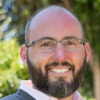
David W. Knight is a Center for Collaborative Conservation Fellow and an assistant professor at Colorado State University. Some of David's interests include community development, community-based conservation, conflict management in natural resources, environmental governance, outdoor recreation, social ecological systems, and sustainable tourism.

Dr. Bastian Thomsen is a conservation social scientist whose research intersects conservation, social responsibility, and tourism. He was most recently an Assistant Professor of Social Entrepreneurship at Boise State University, and holds a Ph.D. in Management from Central Queensland University. He is nearly finished with a second Ph.D. in Environmental Anthropology from the University of Oxford. Bastian is the Strategy & Innovation Editor for the Journal of Ecotourism and has recently had articles accepted for publication in top tier journals such as the Journal of Sustainable Tourism and Annals of Tourism Research. He taught in the MTM program as an Affiliate Faculty last year and is eager to teach in the program full-time, engage with community stakeholders, and to work collaboratively with board members to tie industry needs to classroom lessons. His wife, Dr. Jennifer Thomsen will start her second doctorate in CSU’s DVM program this fall and they love to travel and get outdoors with their two border collie rescues, Bella and Zoey.

Dr. Sarah Walker’s research uses an environmental justice lens to investigate the role well-being can play in helping us better understand people’s relationships with their environments. Specifically , she studies human well-being in the context of climate resilience and adaptation in vulnerable communities around the world. Her work also investigates the well-being benefits of spending time in nature. Sarah received her PhD from Colorado State University and is currently completing her post-doctoral training at University of Colorado Boulder. She’s an avid hiker and cyclist, and loves being in the classroom with students.
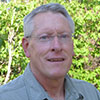
Jim Wurz holds a Master of Science in the management of protected areas, is a co- founder and affiliate of the Center for Protected Area Management at Colorado State University, and instructs a variety of courses in CSU's Department of Human Dimensions of Natural Resources. He has provided, and continues to provide, training and technical support to numerous protected area officials, government institutions, and NGOs in the U.S., Latin America, and other parts of the world. His main areas of expertise include planning in protected areas and surrounding lands, tourism management and public use, conservation at the community level, project evaluation, and field management skills.

Lina Xiong is an assistant professor in the Department of Human Dimensions of Natural Resources. She is also called "Dr. Bear," because her last name in Chinese means bear. Dr. Bear came to the U.S. in 2006 from mainland China. Lina completed her Ph.D. in Business Administration from Temple University in Philadelphia. Before coming to CSU, Dr. Bear had taught many business courses in the College of Business at Marshall University. Her teaching assignment at CSU includes tourism strategic management, tourism marketing, and advanced lodging in the Master of Tourism Management program. She is also responsible for developing several M.T.M. courses in mandarin. Dr. Bear's research interests include service management, internal branding, employee brand motivation, and customer loyalty. She has published several articles in hospitality management journals. Recently, Dr. Bear's dissertation, titled, "Employee Brand Internalization: The Central Route to a Brand Aligned Workforce," has received a Highly Commended Award of the 2014 Emerald/EFMD Outstanding Doctoral Research Awards in the Hospitality Management category. This is a prestigious international annual award presented by Emerald and the European Foundation for Management Development (EFMD). She has worked in hospitality and tourism businesses in both China and the U.S.

"I had previously attended CSU for my first degree and loved the school, so when I needed a career change after COVID, CSU was my first choice. Coming from the health field, I wanted something exciting and aligned with my passion for the outdoors. This program opened doors I never thought possible, guiding me into a career where I now lead outdoor adventure tours and educate others on responsible stewardship of public spaces.
This program not only expanded my understanding of the tourism industry but also showed me how impactful we can be in shaping sustainable outdoor experiences. It helped me see the many career opportunities in this field and gave me the confidence to pursue work that truly inspires me. Without it, I’d still be in a career that wasn’t meant for me—now, I get to do what feels like play every day."
- Mikaila A.

"CSU’s Natural Resource Tourism program stood out for its flexibility and affordability, allowing me to pursue my goal of working for parks at any level—municipal, state, or federal. The online format was perfect since local colleges didn’t offer relevant programs. Shortly after graduating, I earned a promotion to lead interpretive ranger at Waco Mammoth National Monument, after two years as a part-time ranger.
The program taught me how to manage public lands responsibly, create meaningful visitor experiences, and connect people with natural resources. My biggest takeaway was understanding the importance of sustainable tourism. It’s not just about numbers but creating experiences that are environmentally, socially, and economically sustainable. I regularly recommend this program to students at the National Monument seeking careers in natural resource management and tourism."
- Bryce Patterson
Broaden your degree by adding a minor that deepens your interests and builds valuable, career-ready skills. A minor helps you explore new ideas, gain focused expertise, and strengthen your education without significantly changing your degree plan. Many courses can count toward both your major and minor, including courses you’ve already completed, as long as all requirements are finished before graduation.
| Applications are not being accepted to this program. |
Start your application online and upload materials directly into the online system. You can save your progress and return any time.
Apply NowPlanning to transfer credits from another college or university? Please review our FAQ page, then complete a Tentative Transfer Evaluation Form to see how your prior credits may transfer.
Refer to admissions.colostate.edu/apply/ for details about who we look for in our individual review process
Call or email our student success team to find out if the program is a good fit for your goals. Our coaches are available Monday-Friday to help you find the right program and navigate the application process.
Student Success Coach: Terrance Dickens
Phone: (970) 491-7468
Email: terrance.dickens@colostate.edu
Complete Colorado State University's online undergraduate application and pay any associated nonrefundable application processing fee (payable online) or waiver (if eligible).
Online applications must be submitted before 5 p.m. (Mountain Time) on the deadline date. If you miss the application deadline, you may still register for courses to begin your program of study as a non-degree student. Students seeking Federal financial aid must be admitted prior to enrolling.
Complete the Free Application for Federal Student Aid. Use FAFSA code 001350. Additional financial aid information is also available.
View your application status at any time to ensure your application checklist is complete or to check on updates.
Admissions decisions are made on a rolling basis and may take up to six weeks during high volume application periods.
Questions? Call (970) 491-1813 or email Kristina Reda.
We love learning about your goals and answering any questions you have.