
Select one of the options below:

Mastering applied statistics goes beyond simply collecting, organizing, and analyzing data. It also involves deriving meaningful insights from that information, and communicating those insights effectively to people without statistical backgrounds. By learning to tell stories using data analysis, statisticians can have an integral voice within their organizations when the conversation turns to interpreting findings and taking action.
Prepare to meet the growing demands of today's data-dominated employment landscape, and become more equipped to make an impact in nearly any industry, in nearly any situation where people need answers. CSU's online statistics master's program helps you learn to ask the right questions, so you can accurately design and implement statistical procedures, and produce precise and meaningful results.
CSU's online master's in statistics prepares you to confidently measure, control, and communicate uncertainty. You will also gain the tools to effectively present findings to help guide organizational, scientific, and societal advances.
Hone your analytical skills and become an essential resource to meet industry needs. As a graduate student in the online statistics program, you will:
Students in this program can choose to specialize in either statistical science or data science. Both of these specializations share a set of common coursework and also share some of the same electives. However, students will also complete coursework unique to their chosen area of focus.
CSU's Master of Applied Statistics is designed to enable students to start working as practicing statisticians in industry, government, or academia immediately after graduation. Taught by the same faculty, and featuring the same curriculum as the on-campus program, you earn the same regionally accredited degree as on-campus students. Considered a terminal degree, this program is intended for those who plan to pursue a career outside of academia, rather than pursue a Ph.D.
Jobs for mathematicians and statisticians are also expected to increase by approximately 33% between 2016 and 2026, according to the US Bureau of Labor Statistics, significantly faster than the average growth rate for all occupations.
Not surprisingly, the ability to collect and effectively analyze large sets of data is a highly valued skill in nearly every major industry, including:
According to the American Statistical Association (ASA), trained analysts who can help make informed, data-driven decisions are becoming increasingly sought-after employees. Organizations of all sizes are seeking professionals with the ability to turn vast data sets into actionable information. Additionally, technological advances have allowed data processing to become more efficient and less expensive, making analysis of large, related data sets possible. These advancements, known as Big Data, involve new techniques related to the capture, curation, storage, search, sharing, transfer, analysis, and visualization of data and analysis.
Jobs in the field of applied statistics and data science include:
What do students have to say about our applied statistics master's degree program? Get a glimpse of their experiences, hear what they think about CSU's faculty and curriculum, and discover how online education is impacting people just like you.
See how Tracy is using what she's learned in CSU's online applied statistics program to create a more environmentally sustainable lifestyle.
See how the online applied statistics program has helped Ed improve at his job and continue to be able to solve problems that occur in his everyday work.
All courses are delivered online via our learning management system, Canvas. You are not required to 'attend' class at a given time, allowing you to work your studies into your existing schedule. The program can be completed in less than a year for full-time students and less than two years for part-time students. Although the online format of this degree offers flexibility, it still requires the same amount of work and time as an on-campus graduate program. The approximate time commitment per week for any 8-week course is 6 hours per credit, for a total of 12 hours for a 2-credit course. The total time may vary per student, but please plan for the minimum recommended time when taking the Subterm courses for the M.A.S. Program.
In your courses you will:
Your interactions with faculty depend on the specific course, but generally, your instructors have online or telephone office hours and are available by email or course discussion boards.
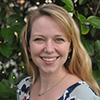
Kirsten Eilertson is an applied statistician and splits her time between collaborative research, consulting, and teaching. As an applied statistician, she has worked with scientists in a variety of fields from evolutionary biology, behavioral neuroscience, biomechanics, functional genomics, and most recently quantitative epidemiology. Her research involves the application of statistical modeling to address specific challenges. Eilertson is a member of the Vaccine Impact Modelling Consortium. Her work has contributed to the development of a novel state-space model for estimating measles disease burden at the country level. The primary aim of this work is to improve understanding of the impact on public health measures.
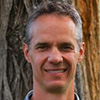
Cooley’s research is primarily in extreme value analysis, which aims to characterize the tail of the distribution. Specifically, his research has focused on describing and modeling extremal dependence both in the multivariate and spatial cases. Much of his research is motivated by quantifying risk associated with extreme weather events and Cooley has collaborated with atmospheric scientists at institutions such as the National Center for Atmospheric Research and the Berkeley National Labs.

Yawen Guan is an Assistant Professor in the Department of Statistics at CSU. Prior to joining CSU, Guan was an Assistant Professor at University of Nebraska - Lincoln and spent two years at SAMSI/NC State University as a postdoctoral fellow. Her research interests are spatial and spatiotemporal statistics, computer model emulation and calibration, Bayesian hierarchical modeling, computational methods for large data, and climate and environmental applications.

Dr. Hess is an applied statistician with the CSU Graybill Stat Lab. Her research interests include applied linear models, bioinformatics and statistical consulting.

Andee Kaplan interested in the intersection of Statistics and Computing, specifically the topics of Bayesian Statistics, Computational Statistics, Record Linkage and Entity Resolution, Markov chain Monte Carlo and Spatial Resampling, Statistical Machine Learning, Interactive Statistical Graphics, and Reproducible Research. She likes struggling with JavaScript and learning new languages, R being her first love.

Kokoszka’s research is concerned with statistical modeling and inference. Areas of current interest include: functional data analysis, time series and extreme value theory. Kokoszka serves on several editorial boards, including Journal of the American Statistical Association, Journal of Multivariate Analysis, Scandinavian Journal of Statistics, and Journal of Time Series Analysis. He is a fellow of the Institute of Mathematical Statistics.

Matt Koslovsky graduated with a PhD in Biostatistics from The University of Texas Health Science Center School of Public Health (UTHealth) in December 2016 and held an appointment as a Post-Doctoral Research Associate in Data Science at Rice University in Dr. Marina Vannucci’s research lab from March 2018 to August 2020. Prior to this role, Matt served as a statistical consultant in the Biostatistics Lab at Johnson Space Center on the Human Health and Performance Contract. Matt joined the Statistics Department at Colorado State University as an Assistant Professor Fall 2020.
Meyer’s main area of research is estimation and inference in statistical models with inequality constraints. This includes non-parametric function estimation using constrained regression splines, density and hazard function estimation with shape constraints, models with order restrictions. Meyer has been published in STATISTICAL SCIENCE, the Journal of the Royal Statistical Society, and the Canadian Journal of Statistics.

Nielsen currently serves as an assistant professor in CSU’s Department of Statistics, specializing in statistics education. He has instructed STAT 201, 204, 301, 315, 460, 472, and 581A4 and STAA 574, in addition to several Math and Stat courses at the University of Colorado.

Courses Ben teaches:
STAT 192 (1st Year Seminar in Statistics)
STAT 301 (Introduction to Statistical Methods)
STAT 331 (Intermediate Applied Statistical Methods)
DSCI 335 (Inferential Reasoning in Data Analysis)
STAA 565 (Quantitative Reasoning)
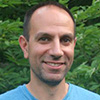
Shaby develops statistical theory and methods to study extreme weather events and high-throughput biological experiments. He works with climate scientists, hydrologists, and wildfire scientists in academia and government to understand and mitigate the risks associated with rare, high-impact events. Shaby was the recipient of a National Science Foundation CAREER award in 2018 and the American Statistical Association Section on Statistics and the Environment's Early Career Investigator Award in 2016. He completed his Ph.D. at Cornell University in 2009 and held postdoctoral appointments at Duke University and UC Berkeley.
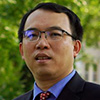
Wang’s research includes object-oriented data analysis, functional dynamic modeling, and spatial statistics. His primary research centers on developing new mathematical and statistical methods to solve problems from various scientific research fields. Object oriented data, such as tree-structured data, random graphs, manifold data, and curve data, are frequently collected. In object-oriented data analysis, many problems were motivated by data from neuro-image, which can be represented by a set of tree-structured objects. The fundamental properties of the topological structures were studied. Wang is particularly interested in the problem of modeling tree-structured data to explain the relationship between tree-structured covariates and numerical response, and/or between numerical covariates and tree-structured response. Recently, his research interest centers on the development of novel statistical learning tools for analyzing big data collected from various networks.

Dr. Wilson's research focuses on the development of statistical methodology for the analysis of complex environmental health data with the motivation of better understanding how exposure to air pollution and environmental chemicals influences human health.

Yunpeng Zhao is an associate professor in the Department of Statistics at Colorado State University. His primary research interests include machine learning methodology and theory in network analysis with applications in biology and the social sciences. He is also working on high-dimensional data analysis with applications in genomics. He has recently become interested in statistical problems in quantum computing.

Tianjian's research is focused on Bayesian methods motivated by applications in clinical trials, cancer genomics, missing data, causal inference, and infectious diseases. His specific methodological research interests include nonparametric Bayesian modeling (for factor analysis, regression, clustering, etc.), Bayesian hierarchical modeling, and Bayesian hypothesis testing. Before joining CSU, he held postdoctoral appointments at the University of Chicago and NorthShore University HealthSystem.
Rapid advances in our capacity to acquire and store data have produced an urgent demand in business, industry, and government for capable data scientists who can extract useful information from large data sets. This specialization within the online M.A.S. degree incorporates data exploration and analysis techniques with a business focus to complement the statistical foundations of the program.
The field of data science primarily deals with the collection, storage, organization, analysis, interpretation, and visualization of large volumes of data. Data scientists use interdisciplinary techniques to provide answers to complex questions. The job of a data scientist may include using scientific computing techniques, machine learning, analytics, and modeling tools to assess trends, patterns, and behaviors or forecast potential outcomes. Statistical inference and machine learning are foundational to the field of data science and empower researchers to extract specific information from massive data sets.
CSU's online Master of Applied Statistics – Data Science Specialization emphasizes the practical and business-related applications of statistical analysis and data science. Be ready to start working as a data scientist in business, industry, or government immediately after graduation. During the program, you will receive a strong background in applied statistical procedures, analytics, data visualization, and statistical computing.
A minimum of 30 credits are required to complete this program.
Note: Prior to beginning courses in the fall semester, students are required to successfully complete the following two noncredit courses during the summer:
Select one of the following:
Select one of the following:
The ability to understand and make inferences from various types of data is an invaluable skill in many different industries. Practicing statisticians are adept at designing experiments, studies, and surveys, and efficiently analyzing the data obtained from them. In addition to drawing meaningful insights from large pools of data, statisticians can also implement various methods for predicting outcomes based on quantitative information.
The Master of Applied Statistics – Statistical Science Specialization emphasizes practical methods in statistics, focusing on real-world applications, rather than theory. Throughout the program, you will acquire a background in applied statistical procedures, data visualization, and statistical computing, gaining the skills to practice as an applied statistician in industry or government upon graduation.
A minimum of 30 credits are required to complete this program.
Note: Prior to beginning courses in the fall semester, students are required to successfully complete the following two noncredit courses during the summer:
Select one of the following:
Select one of the following:
As a student in CSU's online applied statistics master's program, you receive the same education, learn from the same faculty, and earn the same regionally accredited degree as students on campus. Additionally, you can expect:
Learn more about CSU's rankings and accolades.
| Fall Semester | April 30 |
Start your application online and upload materials directly into the online system. You can save your progress and return any time.
Apply NowThe Master of Applied Statistics (M.A.S.) requires applicants to have the following:
Note that meeting the minimum department standards does not ensure admission to the program. Admission to Colorado State University graduate programs is based on a number of factors, including prior academic and professional experience and your personal statement.
The Master of Applied Statistics is a rigorous program that requires regular application of the skills learned in calculus, linear algebra, and statistics. If it has been more than 10 years since you have taken these math courses (or more than five years if these skills are not utilized on a regular basis in the workplace), please contact the department prior to applying.
Prepare the materials below and upload when you apply online.
Complete the online graduate application and pay the nonrefundable application processing fee (payable online). As soon as you have completed the required information, please submit your application. Your application will not be reviewed until it is complete and all required materials have been received.
CSU's Graduate School offers several application fee waiver opportunities. Visit their website to determine if you are eligible for a waiver.
Request one official transcript of all collegiate work completed from all institutions attended. Transcripts from Colorado State University are not required. Transcripts must be received directly from the originating institution to be considered official.
Please Note: Students may be unconditionally admitted and registered in their first semester of courses with an unofficial transcript. Official transcripts must be submitted, prior to or during your first semester, before you can register for your second semester of graduate work. Failure to meet this condition will result in your dismissal from the Graduate School.
Electronic (preferred): Digital Transcripts must be submitted by the originating institution using a secure service such as parchment, eScrip-Safe, the National Student Clearinghouse, or e-Quals. Transcripts received via emails are considered unofficial. Use institution code 4075 for Colorado State University or gradadmissions@colostate.edu if the secure service requires an email address.
Mail (if necessary) Graduate Admissions Colorado State University – Office of Admissions 1062 Campus Delivery Fort Collins, CO 80523-1062
View your application status at any time to ensure your application checklist is complete or to check on updates.
Once your complete application, including supporting materials, is received, the department admission committee will review your application and notify you of their decision.
Proof of English language proficiency is required for applicants from countries or United States territories where there are official languages other than (or in addition to) English. This includes the U.S. territories of American Samoa, Guam, the Northern Mariana Islands, and Puerto Rico.
We love learning about your goals and answering any questions you have.
