Select one of the options below:

CSU's online master's in science education degree helps you improve your knowledge of biology, chemistry, physics, and environmental science, and develop creative teaching strategies to be a more effective science educator.
Educational background and coursework beyond an undergraduate degree are both important factors for school districts when they consider which teachers to retain, promote, and offer a pay increase. School districts may also evaluate teachers’ academic backgrounds when choosing new department heads. Start enhancing your professional credentials and expertise by earning your master’s degree in a program created specifically for current and aspiring natural science teachers.
This Master of Natural Sciences Education (M.N.S.E.) is a good fit for you if you are:
This master's in science education helps you refresh and expand your knowledge of biology, chemistry, physics, and environmental science. Through the use of science lab kits created specifically for individual courses within the program, you get hands-on experience with experiments and projects that you can bring into your own classroom.
Additionally, you will gain tools to improve student learning and engagement by immersing yourself in coursework related to curriculum development, instructional theory, and pedagogy. Start advancing your instructional skills with courses that explore classroom management, presentation skills, communication, and discipline.
Colorado State University graduates more individuals in STEM disciplines (science, technology, engineering, and mathematics) than any other Colorado campus, and prepares more STEM teachers than any other university in the state.
The Master of Natural Sciences Education requires completion of 30-31 credits. All courses are offered online and you have two different paths to choose from:
The option you choose will affect which classes and requirements you'll need to complete to earn your degree.
The coursework option requires completion of 30 credits, including:
NSCI 695 – Independent Study for M.N.S.E. (3 cr.)
The research option requires completion of a 30 credits, including:
NSCI 698 – Research Experience in Natural Sciences (6 cr.)
All science-related coursework is tailored for teachers and focuses on how you can incorporate lessons into your own classroom.
Develop a foundation in research, curriculum development, and policy. EDRM 602 and EDUC 660 are required for the M.N.S.E. degree. Students select either EDUC 619 or NSCI 612; students cannot receive credit for both courses for the M.N.S.E. degree.
Expand your knowledge in a specific science discipline.
Statistical methods for experimenters/researchers emphasizing design and analysis of experiments using R software.
Provide educators with knowledge and skills to plan and implement school-based research to improve teaching and learning.
What is science? What isn’t? Modern western science is a product of the Age of Reason in the 18th century, but its origins are traced back to the ancient Greeks. Skepticism and the scientific method are critical to modern scientific practice. Throughout history there has always been an uneasy relationship between science and culture. Science as a human activity is influenced by culture and vice versa. The course weaves science philosophy, methodology, and history with social and cultural contexts. “Culture wars” centered around heliocentrism, evolution, relativity, continental drift, genetically-modified organisms, and climate change are examined. A major part of the course is devoted to evaluating claims purporting to use “scientific” evidence. Are there common strategies that people use? The placebo effect and confirmation bias are discussed. The goal is to equip you with practical tools for making science-informed decisions, and not simply accept a claim at face value; in other words, being a skeptic. The course concludes with a section on bioethics and social policy, using The Immortal Life of Henrietta Lacks as a resource.
Curriculum Development seeks to provide practicing and pre-service classroom teachers and administrators with a framework for making curriculum decisions. The course examines historical traditions, curriculum philosophies, best practice instructional theories, contemporary curriculum issues, standards practices, and backward design theory.
Ray, wave, and particle models of light, with diverse applications. Introduction to special relativity and quantum physics via light. Includes regular at-home, hands-on activities.
NSCI 619B is a course in classical mechanics. Unlike most such courses, in which student effort is devoted largely to solving textbook-style problems, this course is organized around investigating phenomena in mechanics using the IOLab wireless lab system. The IOLab includes all of the sensors found on modern smartphones as well as a force probe and "wheel sensor". Most topics found in an introductory college-level mechanics course (linear and rotational kinematics and dynamics, friction, oscillations, fluid statics, sound) are explored using those tools. In addition, students are introduced to the physics education research literature. A Science Lab Kit is utilized during this course.
NSCI 620 explores how the structure and chemical properties of molecules are related. It covers chemical bonding, thermodynamics, states of matter, surface chemistry, solubility, and acid-base chemistry. The unique molecular properties of water provide a focus to understand such diverse phenomena as surface tension, cloud formation, protein folding, detergents, thunderstorms, and water quality. This course includes experimental work such as conducting basic experiments on the properties of water in its different states, constructing a global hydrolytic cycle, and measuring the pH of various solutions. A Science Lab Kit is utilized during this course.
Theory and applications for spectroscopy for grade 6-23 science teachers. A Science Lab Kitis utilized during this course.
This course explores the production and use of energy. Topics covered are thermodynamics, energy conversion and efficiency, biochemistry of energy metabolism, and global energy production. Lab exercises encompass experiments like using microencapsulated liquid crystal sheets to track energy flow, calculating equilibrium constants from thermodynamic parameters, and analyzing energy expenditure in athletic performance. A Science Lab Kit is utilized during this course.
The course is designed for grade 6-12 science teachers. It explores the environmental consequences of energy production and consumption. The topics covered include the effects that oxides of carbon, nitrogen and sulfur and mercury pollution have on biological systems and the methods and technologies for ameliorating and/or reducing emissions.
After successfully completing this course, the student will be able to:
Knowledge and skills to improve the teaching of science, technology, engineering, and mathematics for in service K-12 teachers.
NSCI 660 focuses on the processes and patterns of evolution. You study the four mechanisms of evolutionary change and how that change creates the complex biodiversity of the world. Topics covered are the mechanisms of evolution, mendelian genetics, quantitative genetics, phylogenetics, speciation, adaptation, origins of life hypotheses, evolution and medicine, evolution and conservation, life history, sexual selection, human evolution and developmental biology and evolution. Exercises range from problem solving to essays based on the reading of primary literature and articles intended for broad audiences. Some of the problem-solving exercises use simulation software to explore how the mechanisms of evolution alter the frequency of alleles in populations.
This course will provide a broad overview of fundamental ecological concepts for grade 6-12 science teachers. It will explore the interrelationships among organisms and their environment as well as foundational concepts for the various levels of ecological organization from individuals to populations, communities, and ecosystems.
Foundation in earth sciences for secondary science teachers, emphasizing societal relevance and context. Topics include earth science methods and thinking, plate tectonics, minerals and mineral resources, rock formation and identification, geologic time, systems, the hydrologic cycle and water resources, climate, carbon, and energy. A Science Lab Kit is utilized during this course.
Independent study immerses you in the primary scientific literature in biology, chemistry, or physics, and allows you to further tailor the degree toward your preferred science discipline. This study can be completed during any semester throughout the degree, and involves weekly meetings (in-person or at a distance) with your research advisor. It does not require access to CSU campus or another research institution.
In collaboration with an advisor, you develop and complete research in your preferred science discipline. Advisors assist in creating the project and in identifying a research location. The experience can be completed during any semester after your first year in the program, either at CSU or at a research institution convenient to you. Advisors have regular faculty appointments in the Departments of Biochemistry & Molecular Biology, Biology, Chemistry, or Physics.
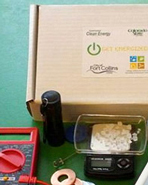 One of the best ways to learn about science is through experimentation and exploration, and our science lab kits give you the opportunity to do just that. These kits contain materials to complement what you learn in your courses, and bring hands-on learning to you at a distance. Experiment with a camera obscura, energy flow, chemical reactions, and more from your own home, then incorporate these activities in your K-12 classroom.
The lab kits contain traditional and non-traditional items to use in scientific experiments, allowing you and your science students to conduct real experiments with safe and appropriately scaled equipment. Each kit is designed to be:
Each kit is designed for a specific course or lesson, and the contents of the kits change based on the instructor's specifications from year to year. Many lessons require you to perform a set of experiments with the kit and then create an appropriate lesson plan for use in your own classroom. The lab kits are used within various NSCI courses and are yours to keep.
Watch this video and learn how to build a low-cost spectrometer—one of the many projects you will learn to conduct with your lab kits.
The lab kits are made possible by the College of Natural Sciences Education and Outreach Center (EOC). The EOC works with faculty to design and prepare the lab kits. The EOC will also help students in the online M.N.S.E. degree locate hard-to-find items for their own classrooms, loan kits for use in the classroom, and provide certain free kits to qualified teachers.
Courses can be accessed online at any time so you can study when it best fits your schedule. Although this is an online program, you should expect a similar workload to a traditional on-campus program, spending approximately 9-12 hours per week preparing for each three-credit course with activities such as:
Take a look at this video demonstration from M.N.S.E. instructor, Martin Gelfand, to get a feel for the online student experience within the program.
Learn more about how online learning works »
As a student in this program, you will receive a degree from a regionally accredited research institution while taking courses at times that fit your busy life. Additionally, you can expect:
 Cherie graduated with a B.S. in Natural Sciences with a minor in Physics Education from Colorado State University. After graduation, she spent 10 years teaching high school Physics in urban and suburban schools in Minnesota and Colorado. She's served as the CO/WY American Association of Physics Teachers (AAPT) President and started the Colorado Quarknet Center, which focuses on helping current high school teachers develop their skills and bring real research into the high school classroom setting.
Cherie is also the long-time organizer of the Denver Area Physics Teacher Meetings, where she regularly brought together area Physics teachers to collaborate, share ideas and best practices. She currently works for the Little Shop of Physics, an informal science outreach program at CSU, sharing her love of science with K-12 students and working with area teachers to support science education in the local schools. Cherie feels very fortunate to be a part of the M.N.S.E. program and work with educators from around the globe who are also interested in continued learning and improvement of their practice.
Cherie Bornhorst teaches NSCI 619A and NSCI 619B.
 Sean Bryan has a strong interest in geoscience education and geoscience literacy. His research background is in paleoclimatology and paleoceanography, using geologic archives to understand climate and oceanographic variability prior to the instrumental record. The geological record of climate provides important context for recent climate change and benchmarks for the evaluation of climate models used to predict climate in the future. His work towards this goal involves reconstructing climate and ocean conditions using the stable isotope, trace and minor element, and radiocarbon geochemistry of foraminifera, collected from marine sediment cores, and corals. These geochemical proxies provide information about seawater temperatures, seawater chemistry, ocean circulation and carbon cycling at the time that the foraminifera or corals lived.
Sean Bryan teaches NSCI 670.
 Raymond Chard graduated from Colorado State University with a B.S. degree in natural science and a minor in chemistry education. He then completed the Master of Natural Sciences Education program in 2013. He conducted his research experience with Dr. Alan Van Orden, developing spectroscopy lab exercises for science educators that are now part of the NSCI 630 course.
Post-graduation, Raymond Chard worked with several education startup companies focused primarily in online education. In his time outside the business world, he has taught at the secondary and collegiate level, with courses spanning earth system science, environmental science, and chemistry. Raymond joined the M.N.S.E. faculty in 2016. He feels fortunate to have the opportunity to do what he loves — help other educators along their journey to professional excellence.
Raymond Chard teaches NSCI 620 and NSCI 630 with Dr. Van Orden.
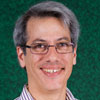 Dr. Gelfand received a Ph.D. from Cornell University and held postdoctoral research positions at University of California, Los Angeles and University of Illinois, Urbana-Champaign before joining the Physics department at
Colorado State University. His research area is theoretical and
computational condensed-matter physics. Some examples of the diverse problems he has contributed to include magnetic flux structures in thin-film superconductors, model calculations for quantum spin systems, and electronic properties of alkali fullerides.
Dr. Gelfand received a Ph.D. from Cornell University and held postdoctoral research positions at University of California, Los Angeles and University of Illinois, Urbana-Champaign before joining the Physics department at
Colorado State University. His research area is theoretical and
computational condensed-matter physics. Some examples of the diverse problems he has contributed to include magnetic flux structures in thin-film superconductors, model calculations for quantum spin systems, and electronic properties of alkali fullerides.
Dr. Gelfand has a long-standing interest in the ideas and innovative teaching methods coming out of the physics education research community and has served on the American Physical Society Committee on Education. He is delighted to have an opportunity to contribute directly to the professional development of science educators.
Dr. Gelfand teaches NSCI 619A and NSCI 619B.
 Dr. Gray received his B.S. in molecular biology from Purdue University and his Ph.D. in molecular biology from the University of Oregon. He has been a biology, chemistry, and biochemistry instructor/professor at Calvin College, Colorado State University, and Front Range Community College. He was also a staff scientist in the Chemistry Department at Colorado State University where he wore many hats: IT support, network and system administration, instructional computing, and computational chemist.
Dr. Gray has conducted research in the areas of protein structure, stability, and folding at the University of Oregon, Calvin College, and Texas A&M University. Energy is an interest being spurred on by teaching the chemistry course for non-science majors at Colorado State University, where about a third of the course is devoted to energy and environment related topics. This interest has resulted in two ebooks with co-author Anthony K. Rappé: Molecules of Life with a Chemistry Bootcamp (2016) and Energy: What the World Needs Now (2013-2016). He is also interested in the intersection of religion and science and was a contributor to Perspectives on an Evolving Creation (2003, Eerdmans). Dr Gray has a long-standing involvement with the American Scientific Affiliation.
Dr. Gray teaches NSCI 640.
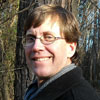 Dr. Lockwood received his Ph.D. from the University of California Davis and held a postdoctoral position with the Program for Interdisciplinary Mathematics, Ecology, and Statistics at Colorado State University and the National Center for Genetic Resources Preservation. He has taught graduate and undergraduate courses in evolution, ecology, population genetics, general biology, mathematical biology, global environmental sustainability, and various mathematics and computer science subjects.
Dr. Lockwood's research areas are diverse with work in the dispersal of marine species, the population dynamics of rangeland grasshoppers, the ecological genetics of wild relatives of crop species, and the philosophy of ecology. He is active in advising policy makers on a range of scientific issues and is a coach for middle school science competitions.
Dr. Lockwood teaches NSCI 660.
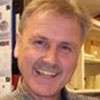 Dr. Mykles received his Ph.D. from the University of California, Berkeley and is the director of the M.N.S.E. program. His research concerns the regulation of molting and limb regeneration in crabs and lobsters, including signaling mechanisms in the molting gland, phenotypic changes in skeletal muscle during lobster development, and proteolytic mechanisms mediating molt-induced claw muscle atrophy. Biochemical, immunocytochemical, and molecular biological methods are used.
He also leads the CSU Crab Lab—a dynamic group of postdocs, graduate students, and undergraduate students studying the cellular and molecular mechanisms of the control of molting and limb regeneration in crabs and lobsters.
Dr. Mykles teaches NSCI 612, NSCI 650, NSCI 695, and NSCI 698.
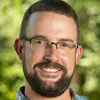 Dr. Reeves received a Ph.D. in ecology from Kent State University. His research has spanned a range of topics including insect ecology, invasive plant control, rangeland ecology, and agriculture, all with a recent focus on climate change. Currently in the Department of Agricultural Biology, Dr. Reeves has also taught for the University Honors Program and the Fish, Wildlife, and Conservation Biology program at CSU. Ecological education (at all levels) is seen by Dr. Reeves as one of the keys to solving the myriad of environmental problems the world faces, so he is excited to have the opportunity to be a part of the M.N.S.E. program.
Dr. Reeves teaches NSCI 665.
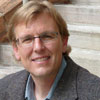 Professor Van Orden was born in Champaigne, Illinois and raised in Pocatello, Idaho. After graduating from high school in 1984, he attended Idaho State University for one year and then transferred to Brigham Young University, where he received a B.S. degree in chemistry in 1990. He attended graduate school in the chemistry department at the University of California-Berkeley and received his Ph.D. in physical chemistry in 1996. This was followed by a three-year stint as a postdoctoral researcher at the Los Alamos National Laboratory in New Mexico.
In 1999, Professor Van Orden joined the Chemistry faculty at Colorado State University where he has taught graduate and undergraduate courses in physical, analytical, and general chemistry. He also supervises a group of student research scientists who specialize in applying the techniques of physical and analytical chemistry to the study of biological molecules and nanometer-sized semiconductor particles. Professor Van Orden and his research group have published over thirty manuscripts in the scientific literature.
Learn how Tori was able to take what she learned with CSU into her own classroom and inspire students to take control of their own learning.
“I was drawn to this program because it allowed me to brush up on current scientific trends and also provided teaching resources. My biggest challenge has been creating authentic, real-world environmental science projects. Environmental issues are constantly changing, and it can be time consuming to search for current data. Many of my classes provided resources I could use when creating projects or looking for the most recent scientific facts and figures. My curriculum has been infused with different labs and activities – from spectroscopy labs to energetics activities – and my students are already benefitting from a more hands-on-learning approach.”

"When I began to look into advanced degree programs, one of the most important factors I considered was that the program needed to have a curriculum that incorporated classes in both education and science. As an educator, I have learned that it is equally important to be a master in your subject area, as well as in your instructional practices and methodology. I believe that the intentional curriculum design of the Master of Natural Sciences Education program [at CSU] will help me develop holistically in my work as a teacher. Another key factor that led me to consider Colorado State University is that this program will allow me to maintain my current teaching position while I pursue my degree. I strongly believe that a critical component to an advanced degree program is the ability to connect your coursework with past and current professional experiences. I am excited about the opportunity to apply newly learned techniques directly to my current teaching position and also to share my experiences with my professors and classmates. The third factor that led me to consider this program is the ability to explore passion areas through the independent study and research components that are built into the curriculum."
| Fall semester | July 15 |
| Spring semester | November 1 |
Start your application online and upload materials directly into the online system. You can save your progress and return any time.
Apply NowThe Master of Natural Sciences Education (M.N.S.E.) degree requires you to have the following, at a minimum:
Note that meeting the minimum standards does not ensure admission to the program. Admission to Colorado State University graduate programs is based on a number of factors, including prior academic and professional experience and the personal statement.
Prepare the materials below and upload when you apply online.
Complete the online graduate application and pay the nonrefundable application processing fee (payable online). As soon as you have completed the required information, please submit your application. Your application will not be reviewed until it is complete and all required materials have been received.
Request one official transcript of all collegiate work completed from all institutions attended. Transcripts from Colorado State University are not required. Transcripts must be received directly from the originating institution to be considered official.
Please Note: Students may be unconditionally admitted and registered in their first semester of courses with an unofficial transcript. Official transcripts must be submitted, prior to or during your first semester, before you can register for your second semester of graduate work. Failure to meet this condition will result in your dismissal from the Graduate School.
Electronic (preferred): Digital Transcripts must be submitted by the originating institution using a secure service such as parchment, eScrip-Safe, the National Student Clearinghouse, or e-Quals. Transcripts received via emails are considered unofficial. Use institution code 4075 for Colorado State University or gradadmissions@colostate.edu if the secure service requires an email address.
Mail (if necessary) Graduate Admissions Colorado State University – Office of Admissions 1062 Campus Delivery Fort Collins, CO 80523-1062
View your application status at any time to ensure your application checklist is complete or to check on updates.
Once your complete application, including supporting materials, is received, the department admission committee will review your application and notify you of their decision.
Proof of English language proficiency is required for applicants from countries or United States territories where there are official languages other than (or in addition to) English. This includes the U.S. territories of American Samoa, Guam, the Northern Mariana Islands, and Puerto Rico.
We love learning about your goals and answering any questions you have.