Select one of the options below:

Hear instructor Lonnie Inzer and Training Chief Randy Callahan explain how this online fire and emergency management degree gives you the advanced training you need to become a skilled leader.
Personnel in fire and emergency services have a long and proud history of providing communities with a wide variety of fire protection, fire prevention, emergency medical, and emergency preparedness services. These organizations need capable leaders with advanced administrative training. If you are looking for an emergency management degree or fire administration degree to help take your career to the next level, this online bachelor's program will help you get there. Build upon your technical training and gain the education and skills you need to take on a wide variety of leadership roles.
A bachelor's degree in fire and emergency services administration can set you apart and increase your opportunities for promotions. Most high-level positions, including company officer, lieutenant, captain, district officer, battalion chief, deputy chief, and department chief officer, require a bachelor's degree at minimum. These positions require you to think critically and strategically. Earning your degree helps you develop a broad knowledge base that will aid your decision making in a variety of complex situations.
This online emergency and fire administration degree program challenges you to develop knowledge and abilities that will serve you in your career and in your life. By teaching you to effectively communicate, think critically, and lead strategically, it provides a broad spectrum of insight that sets you up for success regardless of where you are in your career — be it at the entry or senior level.
Through case studies and analysis, this program challenges you to effectively integrate academic knowledge into administrative and managerial roles, collaborate with peers to solve organizational problems, and apply your knowledge, skills, and competencies to fire and emergency service situations. Courses taught by experienced practitioners in the field help you develop skills that can be applied directly to your job. Improve your knowledge and skills in:
"The classes that are offered at Colorado State are completely applicable to day-to-day operations of the fire department. It's opened my eyes to theories and ideas of how local government works, how federal government works, and how fire service really works overall. This degree helps me become better at my career and my profession, and has allowed me to express myself in a way that I couldn't articulate before."
Watch these videos to hear more of what CSU's online students say about their learning experiences.
Professionals in this industry often require schedule flexibility. This online fire and emergency management degree program allows you to watch lectures and complete assignments at times that fit your busy life. Read more about how online learning works with CSU.
In addition to earning your fire and emergency services administration degree, you have the option to further specialize your knowledge with a degree minor. Choose from nine minors, including:
Did you know that to become a fire chief, you need to have a bachelor's degree? There are many other opportunities for career advancement and promotion for you after completing this program as well. The skills and expertise you acquire can be applied immediately to your job, and help you work toward a higher-level position.
You will gain the skills and knowledge you need to assume administrative, management, and leadership positions in a wide variety of fire protection, prevention, emergency medical, and emergency preparedness services. With an understanding of the evolving requirements of emergency services and a solid base in planning, evaluation, and oversight, you will be prepared to advance to management and administrative roles in the fire and emergency services as:
This degree completion program is beneficial to you if you have an interest in fire and emergency services and want to increase your opportunities for raises and promotions. You will receive a well-rounded background in emergency services, which can help you earn an administrative professional position within your fire or emergency services field.
Hear about our students' experiences with online learning, the skills they gained from the FESA program, and the opportunities for career advancement that came from earning a degree.
See how earning a degree allowed Ralph to follow in his father's footsteps, climbing the ranks in one of the busiest fire departments in the country.
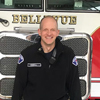
"I gained a focused, structured view inside the fire service, with all its moving pieces including policy, legal, HR, budget, project management, communications, etc. Because of that, I now approach my job with a more holistic understanding of the necessary web of support offered by Fire Administration. I learned the value and importance of the other players throughout the organization. FESA is a great blend of solid instruction, interesting and beneficial coursework, amazing advisors, a school with an established pedigree, and one that wouldn’t break the bank as I worked toward my degree."
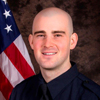
"I have a better understanding of how emergency services organizations function in a "big picture" sense. The FESA program provided me with a well-rounded education pertaining to emergency services management. I feel better prepared to take on new challenges and positions within my current job. The instructors are top-notch, the program is well organized, and the online degree route is flexible for full-time workers in emergency services."
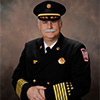 Chief Blackwell began his fire service career as a volunteer in 1979 with the Chesnee, South Carolina Volunteer Fire Department. He served as Fire Chief there from 1991-1996. After that, Chief Blackwell changed careers and became a police officer with the City of Chesnee. He was soon appointed Police Chief. Chief Blackwell has also held positions as Fire Chief at Athol, Idaho Fire Protection District, Assistant Fire Chief with Pantex Fire Department in Amarillo, Texas, and Fire Chief with the Northern Lakes Fire Protection District in Idaho. In 2007, Chief Blackwell was appointed Fire Chief of the Stillwater, Oklahoma Fire Department.
In 2011, Chief Blackwell was appointed as Fire Chief of the Spartanburg, South Carolina Fire Department, where he currently serves. He has a Ph.D. in fire and emergency management administration from Oklahoma State University, M.S. in executive fire service leadership from Grand Canyon University, B.P.S. in fire administration and fire prevention from University of Memphis, and A.S. in criminal justice from Spartanburg Methodist College. He also completed the Executive Fire Officer Program with the National Fire Academy. In addition to his education, Chief Blackwell has been conferred the Chief Fire Officer Designation from the Center of Public Safety Excellence and granted Fellow status with the Institute of Fire Engineers.
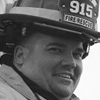 Caleb Connor is a Battalion Chief with Bennett-Watkins Fire Rescue in Colorado with 22 years of fire service experience and an extensive background in fire service instruction, officer development, community risk reduction, and fire code education and enforcement. He has been an instructor since 2009 in the East Metro Fire Training Consortium’s I-70 Corridor Fire Academy, instructing courses in fire prevention/code enforcement, community risk reduction, fire suppression, and alarm systems, public education, and officer development. Caleb also serves on the Colorado Division of Fire Prevention and Control Aircraft Rescue and Firefighting Certification Committee and is a State of Colorado Hazardous Materials instructor. Caleb has also been involved in local government as a member of the Town of Bennett, Colorado’s Board of Adjustment from 2020-2022.
Committed to professional development and learning, Caleb holds an A.A.S. in Fire Service Management, a B.S. in Fire and Emergency Services Administration (FESA) from Colorado State University and is a current Master of Public Administration candidate at the University of Colorado –Denver.
 Holger Durre has 28 years of public safety experience and currently serves as the Fire Chief for the City of Prescott, Arizona. He began his career on a hospital-based ambulance service in Fort Collins while completing a Bachelors degree in Biological Sciences at Colorado State University. Upon graduation from CSU, he began his career in the fire service in 2000 at Poudre Fire Authority, ultimately promoting to the rank of Battalion Chief. In 2017, Chief Durre was promoted to Deputy Fire Chief for the City of Boulder. In 2022, he assumed his current role with the City of Prescott.
Throughout his career, he has served in all major operational and administrative roles in the fire service. This includes operations, fire prevention, training, planning and analysis, and budget administration. Chief Durre has an extensive background in continuous improvement in local government and has conducted several applied research projects on this topic. He consults in the area of strategic planning and serves as a team lead for the Center for Public Safety Excellence (CPSE). Chief Durre has a passion for promoting mental wellness and resiliency for public safety personnel through his role as the Operations Advisor for the All Clear Foundation.
In addition to his Bachelor's degree, Chief Durre holds a Master's of Public Administration from Indiana State University and is a graduate of the National Fire Academy’s Executive Fire Officer program. He is a credentialed Chief Fire Officer with CPSE and is a lifelong leaner. One of the most rewarding sources of that learning are the students in the Fire Service Administration program. He is passionate about ensuring that his courses are taught in a manner to allow students to apply their learning in the current or future career endeavors.
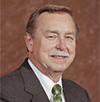 Larry Grosse, Ph.D., began his fire service career as the organizer and manager of five volunteer fire departments for the Texas Youth Council facilities. During his tenure as the Chief of Construction for the Texas Youth Council, he was certified as an Advanced Fire Prevention Inspector by the Texas Commission on Fire Prevention Personnel Standards and Education. After completing a bachelor's degree in architecture, he became licensed by the State of Texas as an architect. He returned to school and completed a Master of Science degree in construction management and a Ph.D. in urban and regional science, from Texas A&M University. His dissertation: Fault Tree Analysis of the High-Rise Hotel Fire Refuge Concept, was the catalyst to his research focus on smoke movement and detection. He led a research team at Texas A&M University that helped define the updated smoke detector requirements for residential occupancy. Dr. Grosse was an invited member of the National Smoke Detector Project sponsored by the U.S. Consumer Product Safety Commission. He has authored, co-authored, and contributed chapters to eight books that relate to fire-safe building design and smoke movement and detection, in addition to contributing to a number of peer-reviewed publications.
Dr. Grosse served as a charter member of the National Fire Academy adjunct faculty, where he worked on a team that developed three courses offered by the National Fire Academy. In his role as an NFA adjunct faculty member, he taught the courses to fire personnel in 38 states.
For 15 years, he served as a professor and department head for the Department of Construction Science at Texas A&M University, then 12 years as a professor and department head of the Department of Construction Management at Colorado State University. In this role, he created the Fire and Emergency Services Administration online degree program at Colorado State University. Since his retirement from CSU, he has continued to teach and serve as a program coordinator for the FESA program.
 Lonnie Inzer has been a college instructor, professor, department chair, and division dean over the last twenty eight years, having retired as a professor emeritus for Fire Science and Emergency Management from Pikes Peak Community College. He is the Pikes Peak Regional Office of Emergency Management Deputy Chief. He is a retired Colorado Springs FD Fire Captain. He has a master’s degree in Organizational Leadership from Fort Hays State University in Kansas, and a B.S. from the Forestry and Natural Resources College at Colorado State University in Fort Collins.
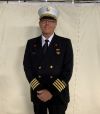 Kurt started as a career industrial firefighter for Bethlehem Steel Corporation in 1974. Bethlehem Steel Fire protected the Burns Harbor Indiana Division, which employed 8,600 and produced 5.3 million tons of finished steel annually. He advanced to Fire Chief in 1996. In 2003, he retired from BSFD to accept the position of Fire Science Program Coordinator/Assistant Professor for Colorado Mountain College (CMC). In 2013, he retired from CMC to be closer to his five grandchildren in Fort Collins. While working as a career firefighter and educator, he also served as a volunteer firefighter for 44+ years, and retired as Deputy Chief for the Gypsum Fire Protection District in Gypsum, CO, in 2018. In September 2016, he was hired as the Interim Fire Chief for the Greater Eagle Fire Protection District, Eagle, CO while they completed a search for a permanent chief. He was a guest instructor for the Duneland School of Emergency Response (1999-2007, Chesterton, Indiana), the Front Range Flammable Liquids School (2003-2012, Commerce City, CO), and the Annual Industrial Fire School, Texas A & M University (2005-2017, College Station Texas.)
Kurt has been an Adjunct Instructor for the FESA Program since 2013, teaching FESA 330, 336, 341, 342, 438, 441, and 442. He attended the Fire and Emergency Services Higher Education Annual Conference (National Fire Academy) from 2003 to 2014, and is a Life member of the International Association of Fire Chiefs, the National Fire Protection Association, and the Indiana Volunteer Firefighters Association. Kurt has earned degrees from Indiana Vocational Technical College, Purdue University, and Southern Illinois University. Like many in the fire service, Kurt got cancer. Unlike too many of our Brothers and Sisters, Kurt is a cancer survivor. His favorite job title is “Grampa”.
 John Roper graduated from the Fire & Emergency Service Administration degree, and is excited to give back to the very program that assisted in propelling his career. After the FESA program, John attended CSU Global for his masters in Organizational Leadership with emphasis in Human Resource Management. He then attended Grand Canyon University to obtain a Doctorate in Education in Organizational Leadership with Emphasis in Organizational Development. John’s research focuses are on Firefighter health and wellness. Professionally, he works for Mountain View Fire Rescue located in Boulder/Weld counties north of Denver as a Lieutenant (company officer).
 Stephen E. Sears transferred to the Forsyth County Fire Department in September 2018 for professional developmental and personal growth in seeking the full time Fire/EMS training position. He serves the department as a Georgia Level III Paramedic Instructor/Coordinator for the Emergency Medical Technicians in-house recruit program and hosts courses offered through the National Board on Fire Services Professional Qualifications, Federal Emergency Management Agency, and the Georgia Firefighter Standards and Training Council. Sears also holds multiple instructor certifications with the American Heart Association to include Cardiopulmonary Resuscitation, Advanced Cardiac Life Support, and Pediatric Advanced Life Support.
Prior to serving as a training instructor, Sears served as a Sergeant/Apparatus Operator in Hall County Fire Services since 2007 and completed certifications for Firefighter I & II, Airport Firefighter, Apparatus Operator: Pumper, Aerial, ARFF, Tiller, & Mobile Water Supply, Hazardous Materials: Awareness, Operations, Technician, & Incident Commander, Fire Instructor I-III, and Fire Officer I-V. Sears is currently in training for Fire Investigator and Fire Inspector I-III all to be completed March 25, 2022. He is also already registered for Plan Examiner I for April 2022.
His fire service career started over 20 years ago as a volunteer in Pennsylvania while completing his B.S. at Allegheny College (2004). He then earned his M.S. from Washington State University (2006) and Ph.D. from Cornell University (2010), all in Geology. While in New York he served the Cayuga Heights Fire Department as an Assistant Chief and contributed as a County Fire Instructor for Tompkins County. In 2010, he moved to Houston, Texas to work for an international oil & gas company as a research scientist and exploration geologist. In Texas he served the 600 member Cy-Fair Fire Department as a station officer, board member, and ultimately managed the department’s fire training program for 350 volunteers. Starting in 2016 he served seven years as the Fire Chief for the Estes Valley Fire Protection District, adding a regional training program and strategic planning. He earned his Chief Fire Officer designation from the Center for Public Safety Excellence in 2021, Chief Training Officer and Fire Marshal designations in 2022, and completion of the National Emergency Manager Basic Academy in 2023.
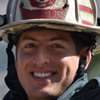 David Wolf currently serves as the Assistant Chief of Strategic Planning with Grand Fire Protection District in Colorado. He supports work at the state level as Chair of the Volunteer & Combination Section of the Colorado State Fire Chiefs, and at the national level on the technical panel for the UL FSRI Study of Fire Service Residential Home Size-Up and Search & Rescue Operations. He participates in many committees and boards focused on advancing fire service training, addressing recruitment & retention challenges, and improving diversity, equity, and inclusion in the fire service.
His fire service career started over 20 years ago as a volunteer in Pennsylvania while completing his B.S. at Allegheny College (2004). He then earned his M.S. from Washington State University (2006) and Ph.D. from Cornell University (2010), all in Geology. While in New York he served the Cayuga Heights Fire Department as an Assistant Chief and contributed as a County Fire Instructor for Tompkins County. In 2010, he moved to Houston, Texas to work for an international oil & gas company as a research scientist and exploration geologist. In Texas he served the 600 member Cy-Fair Fire Department as a station officer, board member, and ultimately managed the department’s fire training program for 350 volunteers. He earned his Chief Fire Officer designation from the Center for Public Safety Excellence in 2021 and is currently working on qualification as a Certified Emergency Manager.
Yes, a working knowledge of fire and emergency services provides an important base for understanding terminology and concepts utilized in course content. Most students in this program have an EMT certificate and/or have completed fire academy. A fair amount have been a first responder for many years before coming to our program and continue in their jobs while working on their FESA degree.
The amount of time you will spend weekly depends on the amount of coursework you commit to each semester as well as your learning and studying style. Although this degree offers flexibility, it still requires the same amount of work and time as an on-campus program. It is recommended to spend nine to twelve hours per week on a three-credit course.
You can transfer a maximum of 64 credits from accredited community colleges or similar two-year institutions. Additional upper-division credits are also eligible for transfer consideration if they are from accredited four-year institutions. In some cases, credit from military, fire, and emergency service training may be transferred if that training carries a credit recommendation from the American Council on Education (ACE).
The length to graduation depends on how many transfer credits are brought in by a student and how many classes a student wants to take each semester. Since most of our students are working professionals, they generally take only one to two courses a semester. With the addition of transfer credits, most students can graduate in three to four years.
Yes, you will earn the same CSU diploma that an on-campus student earns. It will not say that the degree was online or distance.
Your interactions with the faculty depend on the specific course, but online courses do provide you with online office hours and email contact information as well as discussion board postings. You also collaborate on projects and exchange ideas with fellow classmates through email and discussion board postings.
A minimum of 120 credits are required to complete this degree. This includes:
The number of courses needed for completion of the program depends on:
CSU's composition requirement should be met in your first semester after admission. Transfer students must satisfy CSU's admission requirement in mathematics.
You must take the 11 core FESA courses for a total of 37 credits. The remainder of the credits needed for graduation can be satisfied with transfer coursework and electives in accordance with the credit totals described in the program requirements and departmental and university policies.
You are encouraged to design a program of study choosing electives that complement your professional interest areas and career status. Elective seminar (FESA 492) and independent study (FESA 495) opportunities are provided to allow you to apply professional experience to learning activities.
The curriculum listed below is intended to inform prospective students about the overall theme of the program and should not be used as an example program of study. Students need to consult their advisor to develop a degree completion plan based on the credits transferred into this program. You have the option to use the TransferologyTM website to conduct a self-review of your potential transfer courses. This tool will assist you in seeing how your previous college coursework may transfer to CSU.
(non-selected FESA courses can be taken toward the total elective total)
The Bachelor of Science in Fire and Emergency Services Administration will prepare you for managerial positions. Coursework builds upon your technical training and provides you with knowledge in emergency services management, personnel administration, finance, and program development and evaluation. Prior experience in fire and emergency services is strongly recommended.
This online bachelor's degree completion program permits you to take the required courses in the order that best suits your needs. You have the flexibility to get the degree you want without a strict timeline or schedule of completing the curriculum. While the degree can be completed in two years, most students in this degree program require three to four years, taking an average of two courses per semester. Although this degree offers flexibility, it still requires the same amount of work and time as an on-campus program. It is recommended to spend nine to twelve hours per week on a three-credit course. This will vary depending on your learning and studying style.
Your interaction with faculty and fellow students depends on the specific course, but the online courses do provide you with online office hours and email contact as well as discussion board postings.
This self-paced online program allows you to earn your degree while maintaining your busy work and family schedules. Is online learning right for you?
Grow your knowledge and focus on a topic that interests you. A degree minor can help you discover new passions and talents, and further specialize your education so you become more marketable to employers. Relevant courses often apply to both major and minor requirements, so a minor can be added without greatly changing your degree plan.
Courses already taken can apply to a minor regardless of when the minor is added to your student record. All minor requirements must be completed prior to graduation.
Build knowledge of production management, financial management, marketing management, international development, and trade through an agricultural lens. To earn the minor, you must complete 21 credits from the following courses:
Get a cross-cultural view of humanity and the broadly conceived dimensions of human behavior. You have the option to focus your anthropology studies on one or more sub-disciplinary divisions, including physical anthropology, archaeology, ethnology, or applied anthropology. To earn the minor, you must complete 22 credits from the following courses:
Required Courses:
Total credits: 21
Add to your knowledge base and feel confident working with fields like computer programming, software development, cyber security, and more.
Program Total Credits: 24
Please note: Additional Math courses may be required depending on the 300/400 level courses that students choose.
Explore creative writing in one or more of the following genres: poetry, fiction, or creative nonfiction. In addition to broadening your writing repertoire, gain workshop experience at an advanced level. To earn this minor, you must complete a minimum of 21 credits in courses with E or CO subject codes, with at least 15 upper-division credits.
The Minor in Design Thinking provides students with an opportunity to develop creative methods and processes for solving societal problems. This human-centered approach engages users and stakeholders in interdisciplinary co-design processes and applies elementary or emerging technologies to develop prototypes that improve spaces, objects, services, problems and ideas benefitting daily experiences and overall quality of life. Students will gain an awareness of the impact of design thinking and its application – to their major, discipline, or profession. Nancy Richardson Design Center course offerings are available in a mix of online, hybrid, or face-to-face. For a full list of learning opportunities offered by the RDC, please visit the courses page.
To earn the minor in Design Thinking online, you must complete 21 credits from the following courses:
Note: Some online courses are still in development.
Gain insight into current socioeconomic problems in the areas of resource allocation, inflation, unemployment, income distribution, environmental degradation, international trade, and monopoly power. This minor prepares you for careers in business management, teaching, government, banking, and public policy. To earn the minor, you must complete 21 credits from the following courses:
Prepare for a variety of careers in gerontology and develop an understanding of the biological, psychological, and social aspects of adult development and aging. This interdisciplinary minor prepares you to fill the need for well-trained professionals to support aging adults, and can be paired with any CSU major.
Prepare to meet today's pressing environmental challenges with this interdisciplinary minor offered by The School of Global Environmental Sustainability (SoGES). Explore innovative research to understand how to solve problems that arise between humans and the environment. To earn your minor, you must complete 21 credits (12 upper-division credits) from the following courses:
At least 3 credits must be upper-division (300-400 level). Courses may not satisfy two groups.
Upper-Division Elective – select 3 upper-division credits from categories A-D with a subject code not previously taken (3 cr.)
Expand the breadth of your knowledge by earning an undergraduate minor in history. Choose from a range of courses based on your interests. This minor may be particularly useful for students who plan to pursue careers in education, public service, government, museums and archives, law, and other professions that require skills in research, writing, and the analysis of information. To earn the history minor, you must complete 21 credits from the following courses. (Note: You must complete at least 12 upper-division credits and 9 lower-division credits).
Growing and managing plants requires you to understand the science and the business of cultivation, and this online bachelor's degree minor emphasizes both. To earn the horticulture minor, you must complete 21 credits from the following courses.
The Human Development and Family Studies minor provides students across all majors with an opportunity to select course work relevant to their career goals. Students will learn about human development at various stages of the lifespan, within the context of diverse families and social identities. This minor offers students the opportunity to expand their thinking about how relationships, family, culture, biological make-up, and environmental factors influence outcomes related to thinking skills, physical health, and social-emotional well-being across the life cycle. Students will gain an awareness of how to optimize their own and other's development in their careers and personal lives. The HDFS department is committed to promoting the success and well-being of students from heterogeneous backgrounds and experiences.
Students must satisfactorily complete the total credits required for the minor. Minors and interdisciplinary minors require 12 or more upper-division (300- & 400-level) credits. Additional courses may be required due to prerequisites.
Courses from this list may not double-count for the Gerontology Interdisciplinary Minor.
A minimum grade of C (2.000) is required in each course used to satisfy the requirements of the Minor in Human Development and Family Studies. Courses used as substitutions also require a minimum grade of C (2.000).
Select a minimum of 18 credits from the following (a minimum of 12 credits must be 300-level or higher)
Develop an understanding and appreciation of diverse cultures and peoples with courses in international and global history, politics, languages and cultures, economics, and environmental issues. To earn this minor, you must complete 21 credits from the following courses:
One course from each category, 12 credits total with at least 9 credits in upper-division (300-400) coursework.
This interdisciplinary minor is sponsored by departments in different colleges across CSU: Computer Information Systems, Computer Science, English and Journalism and Media Communication. The program is designed for students seeking a broad foundation in information technology, but not seeking to major in a specific information technology-related field. The program requires 21 credits and is open to students majoring in any field other than computer science, computer information systems, and electrical and computer engineering.
Select any 15 credits from the following
Program Total Credits: 21
Note: Nine credits must be from upper-division courses. A minimum of six credits must be completed from at least two subject codes.
Select one course from the following:
Select one course from the following:
Select one course from the following:
Please note: Additional Math courses may be required depending on the 300/400 level courses that students choose
Understand the role and influence of mass media in American society and other cultures by studying media and film history, criticism, law, ethics, social effects, cultural consequences, and multicultural and international media issues. To earn the minor, you must complete 21 credits from the following courses:
Gain a foundation in political theory and prepare for careers in law, teaching in the social sciences, journalism, and public service. To earn the minor, you must complete 21 credits from the following courses:
The minor in Science Communication is designed to educate highly qualified communicators who have interests in specialized academic disciplines and career fields. Because science often involves complicated research and processes, communicating the results of that work requires special skills. This program is designed to prepare students for a wide range of niche career opportunities in media, corporate communication, science-related industries, and scientific environments.
Develop technical skills and knowledge to study human societies. To earn this minor, complete 21 credits from the following courses:
Please connect with your assigned advisor to request to add a minor. Note that you must apply and be admitted to the University for a bachelor's degree program before you can add a minor to your student record. Once you are admitted, one or more minors may be added to your student record.
Open to all undergraduate students, the Certificate in Design Thinking will improve not only the way students learn and find solutions to problems in their current coursework, but will also help make students more employable with sought-after marketable skills. Students will gain an awareness of the impact of design thinking and its application – regardless of discipline, profession, or major. Nancy Richardson Design Center course offerings are available in a mix of online, hybrid, or face-to-face. For a full list of learning opportunities offered by the RDC, please visit the courses page.
To earn the certificate in Design Thinking online, you must complete 12 credits from the following courses:
Note: Some online courses are still in development.
The undergraduate Certificate in Integrated Pest Management (IPM) will equip students with in-depth knowledge of principles of integrated management of pest insects, weeds, and diseases associated with managed and natural landscapes. The students will learn about principles underlying integrated pest management, become familiar with key pests, and learn how to apply IPM in managed landscapes with a goal of minimizing environmental and economic impacts of pest control. This certificate is an excellent choice for students interested in entering the workforce immediately after graduation, as well as professionals that require certification in IPM. The certificate will prepare the students for careers in crop protection, pest management education and policy, among others.
The Certificate in Macroeconomics will educate students in the key ideas, tools, and policies of macroeconomics. Major ideas include the causes and consequences of economic growth, unemployment, inflation, and the changing distribution of income, both in the U.S. and internationally. Students will develop both theoretical and analytical skills that are highly valued by employers.
Required Courses
Select a minimum of 6 credits from the following:
Program Total Credits: 9
For students interested in working in animal science, veterinary medicine, or related fields, this certificate program teaches intermediate-level Spanish for use in agricultural and animal care settings. Learn to communicate in Spanish about livestock, equine, and small animal breeds, give directions for animal care and handling, issue instructions for safety and drug administration, and more.
Courses
Prepare for a career as a seed analyst with online courses in seed technology. These courses, led by Colorado State University and supported by three other major universities (Iowa State University, Virginia Tech, and the University of Kentucky) and the Crop Science Society of America, offer a comprehensive overview of seed analysis, a technical skill requiring patience, attention to detail, and a scientific understanding of seed biology. After completion, you will be prepared to complete the examinations to become a Registered Seed Technologist.
Courses
Note: Additional study and testing is required to become a Certified Seed Analyst or Registered Seed Technologist.
| Fall semester | August 1 |
| Spring semester | January 1 |
| Summer semester | May 1 |
Start your application online and upload materials directly into the online system. You can save your progress and return any time.
Apply NowPlanning to transfer credits from another college or university? Please review our FAQ page, then complete a Tentative Transfer Evaluation Form to see how your prior credits may transfer.
Refer to admissions.colostate.edu/apply/ for details about who we look for in our individual review process
Call or email our student success team to find out if the program is a good fit for your goals. Our coaches are available Monday-Friday to help you find the right program and navigate the application process.
Student Success Coach: Terrance Dickens
Phone: (970) 698-7337
Email: terrance.dickens@colostate.edu
Complete Colorado State University's online undergraduate application and pay any associated nonrefundable application processing fee (payable online) or waiver (if eligible).
Online applications must be submitted before 5 p.m. (Mountain Time) on the deadline date. If you miss the application deadline, you may still register for courses to begin your program of study as a non-degree student. Students seeking Federal financial aid must be admitted prior to enrolling.
Complete the Free Application for Federal Student Aid. Use FAFSA code 001350. Additional financial aid information is also available.
View your application status at any time to ensure your application checklist is complete or to check on updates.
Admissions decisions are made on a rolling basis and may take up to six weeks during high volume application periods.
Questions? Call (970) 698-7337 or email terrance.dickens@colostate.edu.
We love learning about your goals and answering any questions you have.